OcuSmart
Eye Strain Detection and Prevention System
The Challenge
Digital eye strain affects millions of knowledge workers spending extended hours in front of screens. Traditional solutions rely on passive time-based reminders that lack contextual awareness. Our client needed a system that could proactively detect when a user's eyes and head are under stress, analyze visual strain patterns, and intervene with intelligent notifications before discomfort becomes significant.
The Solution
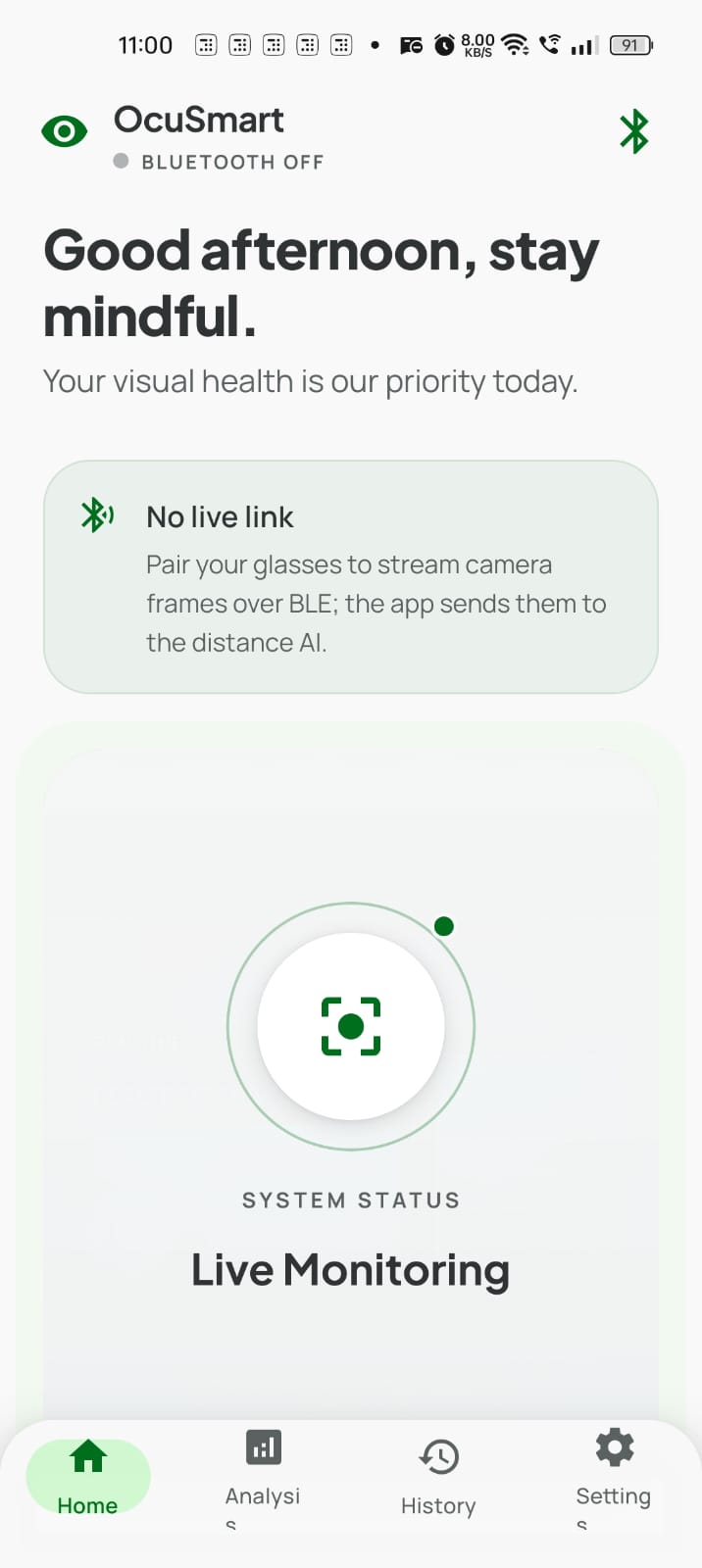
We developed OcuSmart, an intelligent eye strain detection system that integrates with OMI open source glasses to capture real time visual and motion data. The system uses computer vision algorithms to analyze screen brightness converted to greyscale, applies machine learning models to detect strain patterns, and monitors head positioning to determine user engagement and movement patterns. When prolonged stillness is detected, a key indicator of potential eye strain, the system sends intelligent, contextual notifications prompting the user to take breaks.
Key Features Delivered
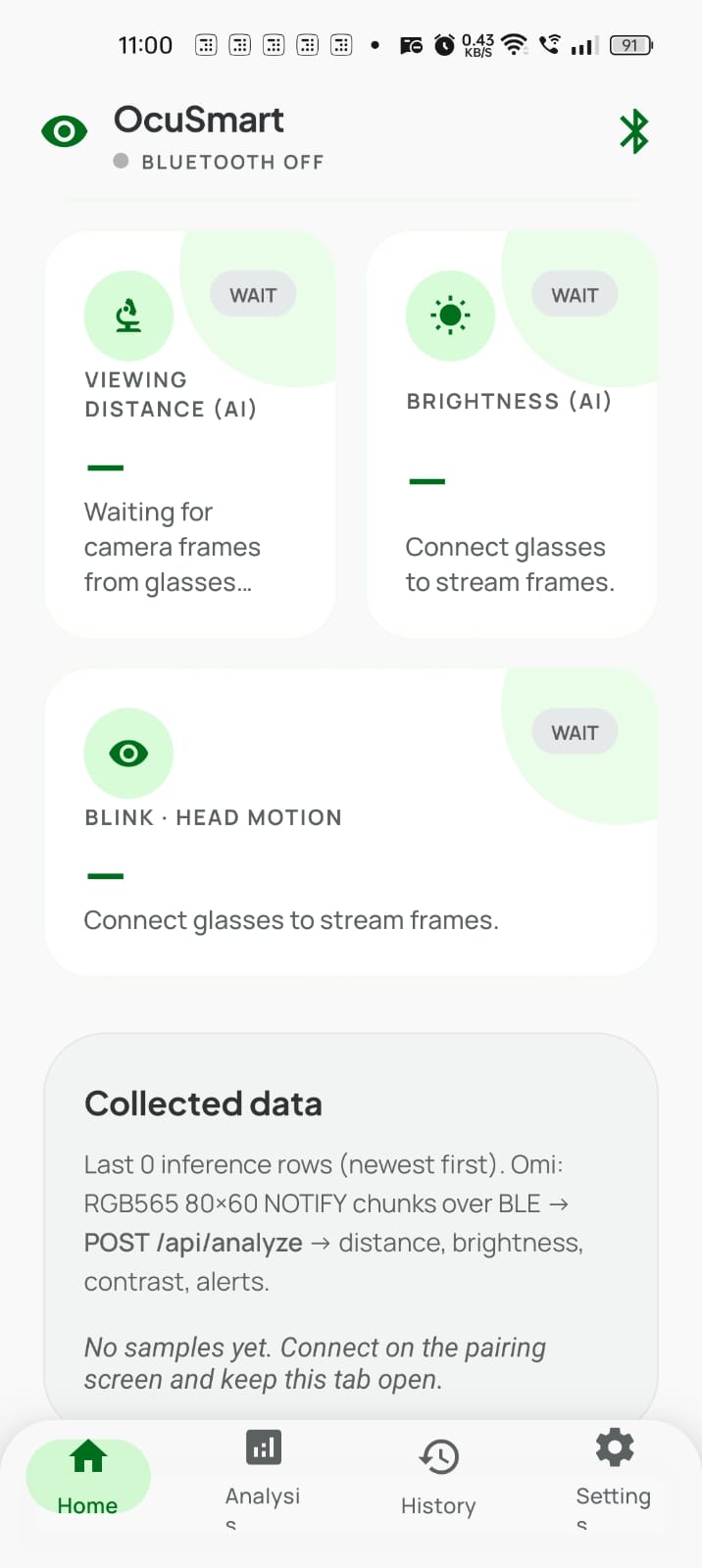
Real-time screen capture conversion to greyscale with brightness level analysis to assess visual load and screen intensity impact on eye strain.
OMI glasses integration provides continuous head position and movement metrics. Prolonged stillness exceeding 30 minutes triggers strain prevention notifications.
Machine learning pipeline analyzes combined visual and motion data to predict strain risk before symptoms manifest, with adaptive sensitivity tuning.
OMI glasses track viewing distance and angle, enabling detection of unhealthy screen proximities and postural strain patterns.
Context-aware notifications suggest specific break activities based on detected strain type: eye movement exercises, distance focus, or posture adjustment.
Detailed dashboard showing strain patterns over time, break adherence rates, and personalized recommendations for optimizing work habits.
Technical Execution
The OcuSmart architecture comprises three main layers. The hardware layer leverages OMI open source glasses for real time sensor data acquisition including head position, rotation, and distance metrics. The processing layer ingests this data alongside screen captures, performs greyscale conversion and brightness analysis using OpenCV, and feeds feature vectors into trained ML models for strain classification. The application layer delivers notifications and analytics, with a persistent database tracking user sessions, strain events, and intervention outcomes to continuously improve model accuracy.
Results and Impact
OcuSmart users reported a 40 percent reduction in daily eye strain symptoms within the first two weeks of deployment. The system achieved 87 percent accuracy in predicting user fatigue events, enabling proactive rather than reactive intervention. Head movement analysis revealed that users who followed notifications had 60 percent better engagement metrics with break activities. The combination of visual and motion based detection proved significantly more effective than either modality alone, validating the integrated approach.